
The ocean is one of the most important parts of life on Earth. It gives us food, supports millions of living species, controls weather patterns, and helps balance the planet’s climate. But today, oceans are facing serious problems. Plastic pollution, overfishing, climate change, coral damage, and loss of marine life are making ocean protection more urgent than ever.
At the same time, technology is changing the way people understand the world. One of the most talked-about technologies today is artificial intelligence, also called AI. When AI is used to study and protect oceans, it can help people make faster, smarter, and more informed decisions.
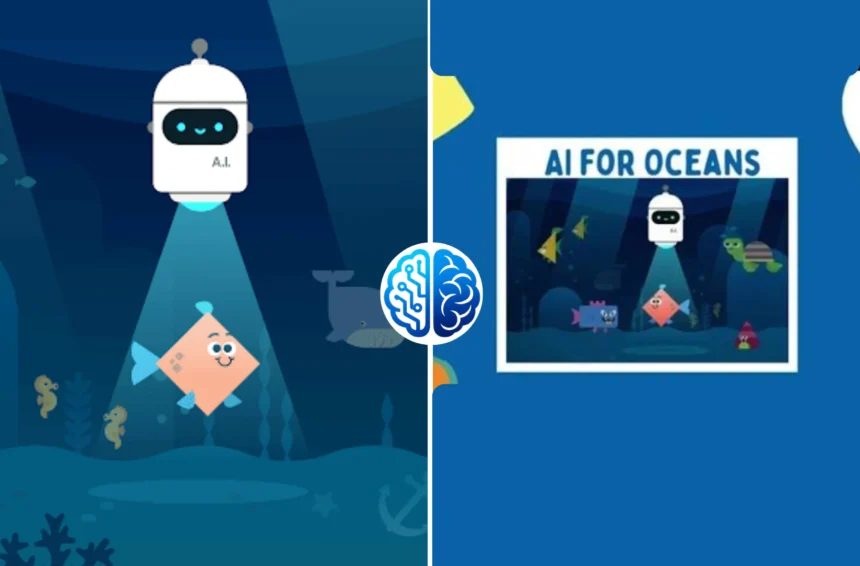
This is where AI for Oceans becomes important. The phrase is commonly linked with Code.org’s educational activity, where students learn how artificial intelligence and machine learning work by training an AI model to identify fish and ocean trash. But the idea also connects to a much bigger topic: how AI can help protect marine life and support ocean conservation in the real world.
What Is AI for Oceans?
AI for Oceans is an interactive learning activity created to introduce students and beginners to artificial intelligence in a simple and practical way. Instead of explaining AI through complicated technical language, the activity uses an ocean-cleaning example that is easy to understand.
In the activity, learners train a computer model to recognize different objects in the ocean. For example, they may teach the AI to separate fish from trash. The AI looks at the examples given by the user and then tries to make decisions on new images.
This helps learners understand an important point: AI does not automatically know what is right or wrong. It learns from the examples people give it. If the examples are clear and balanced, the AI can perform better. If the examples are confusing, limited, or biased, the AI may make mistakes.
That simple lesson is one of the biggest reasons AI for Oceans is valuable. It teaches that technology is powerful, but it still needs human guidance, responsibility, and care.
Why the Ocean Theme Matters
The ocean theme makes the activity more meaningful because it connects technology with a real-world problem. Many students hear about AI as something used in apps, games, search engines, or social media. AI for Oceans shows that the same kind of technology can also be used for environmental protection.
Ocean pollution is a serious issue. Plastic bags, bottles, fishing gear, and other waste can harm sea animals. Some animals eat plastic by mistake. Others become trapped in waste materials. These problems affect not only marine life but also humans, because healthy oceans are connected to food systems, climate, tourism, and coastal communities.
By using an ocean-cleaning activity, AI for Oceans gives learners a clear example of how computer science can support good causes. It turns a technical topic into something emotional and understandable.
How AI for Oceans Works
The basic process of AI for Oceans is simple. First, the learner is shown images. These images may include fish, sea creatures, or trash. The learner labels each image based on what it shows.
These labels become the training data. Training data is the information used to teach an AI system. In this case, the AI studies the labeled images and looks for patterns.
For example, if many images of bottles, cans, and bags are labeled as trash, the AI starts connecting those visual patterns with the word “trash.” If many images of fish are labeled as marine life, the AI starts learning what fish-like objects may look like.
After training, the AI is tested with new images. It tries to predict whether the image shows fish, trash, or another category. Sometimes it gets the answer right. Sometimes it gets the answer wrong.
This trial-and-error process helps learners see how machine learning works in a practical way. The AI is not following one fixed rule. It is learning from examples.
What Students Learn
AI for Oceans teaches more than just how to click through an activity. It introduces several important ideas in computer science and digital literacy.
One major lesson is machine learning. Machine learning is a type of AI where computers learn from data instead of being directly programmed for every possible situation. This is different from traditional programming, where a human writes exact instructions.
Another lesson is data quality. If the AI receives poor training data, it may make poor decisions. For example, if the training images are not diverse enough, the AI may fail when it sees something new.
The activity also teaches bias. Bias in AI happens when a system learns unfair or incomplete patterns from the data. This is an important topic because AI is now used in many areas of life, including education, business, healthcare, and public services.
By learning about bias through a simple ocean example, students begin to understand why responsible AI matters.
Why Training Data Is Important
Training data is the foundation of machine learning. A machine-learning model learns from the examples it receives. If those examples are strong, accurate, and varied, the model has a better chance of making useful predictions.
In AI for Oceans, training data may seem simple because the images are easy to label. But the lesson behind it is very important. Real AI systems also depend on training data.
For example, if scientists train an AI model to recognize whales in satellite images, they need many accurate examples of whales from different angles, locations, lighting conditions, and ocean surfaces. If the data is too limited, the AI may miss whales or mistake other objects for whales.
This is why AI is not only about computers. It is also about human judgment, careful data collection, and responsible design.
Benefits of AI for Oceans
One clear benefit of AI for Oceans is that it makes artificial intelligence easier to understand. Many people feel AI is too advanced or too technical. This activity breaks the idea down into a simple learning experience.
Another benefit is that it encourages students to think about environmental problems. The activity does not only teach AI as a computer topic. It shows how technology can be used to care for the planet.
AI for Oceans also improves problem-solving skills. Learners must think about what examples they give the AI and how those examples affect the model’s decisions. This builds logical thinking and digital awareness.
It also introduces ethics at an early level. Students learn that AI systems can make mistakes, and those mistakes often come from the data or instructions given by humans. This lesson is useful far beyond the classroom.
Finally, the activity can inspire students to explore computer science. A child who enjoys AI for Oceans may later become interested in coding, data science, marine biology, environmental science, or technology for social good.
Real-World AI in Ocean Protection
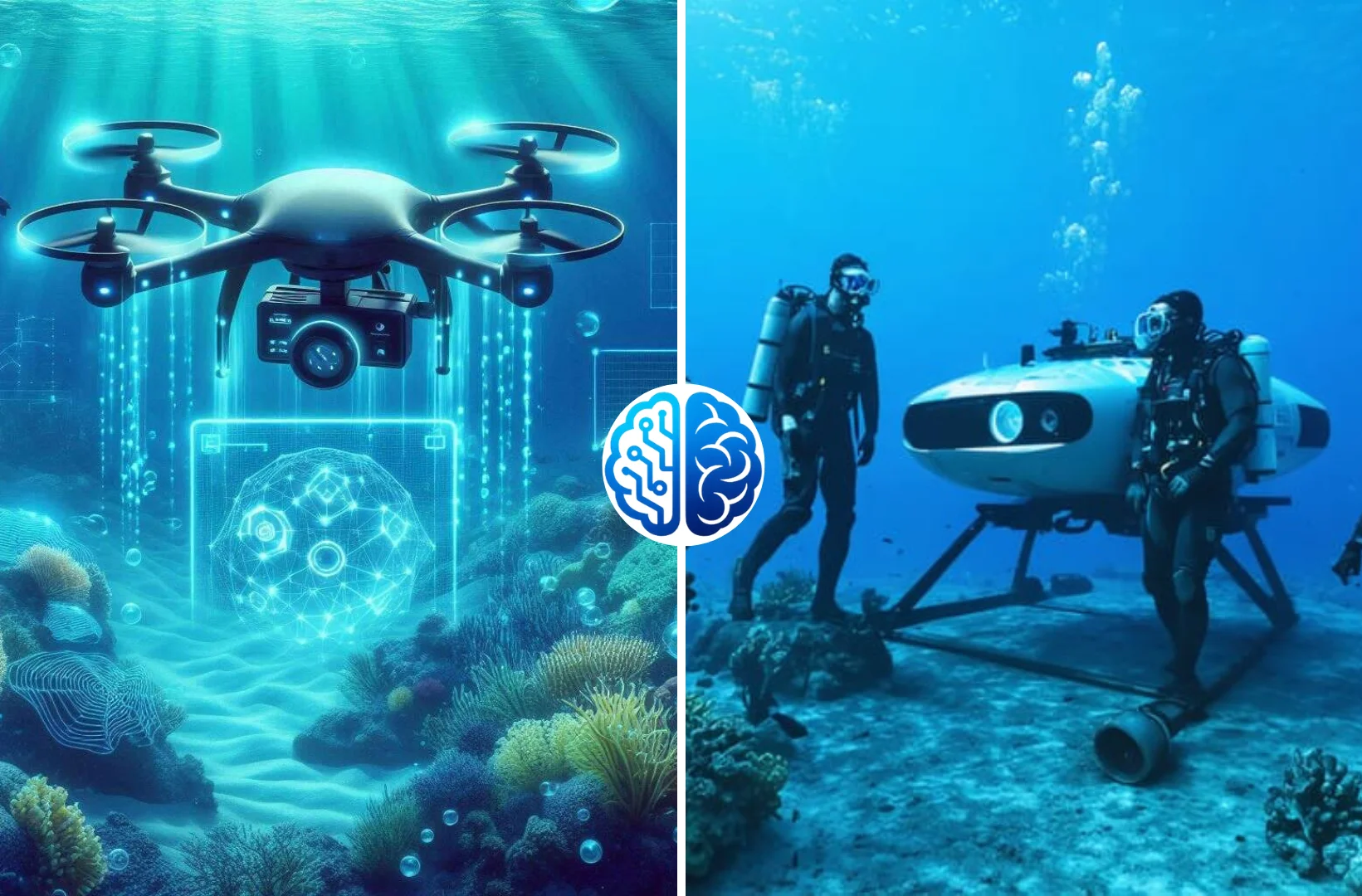
The educational activity is simple, but real-world AI for oceans is already much more advanced. Scientists and conservation groups are using AI to study the ocean in ways that were very difficult before.
One major use is image recognition. Underwater cameras and research vehicles collect huge amounts of video and photo data. Manually reviewing all of that material can take a long time. AI can help detect animals, classify species, and highlight important moments for researchers.
AI can also support whale protection. Some systems use satellite images, acoustic recordings, or drone footage to detect marine mammals. This can help researchers understand where animals are moving and how human activity may affect them.
Another use is monitoring illegal fishing. AI can analyze vessel movement, satellite data, and ocean activity to help detect suspicious patterns. This can support better management of marine protected areas.
AI can also help with coral reefs, water quality, mangroves, and climate-related ocean research. In many cases, AI is useful because the ocean produces massive amounts of data, and humans need tools to understand that data more efficiently.
AI and Marine Life
Marine life is often difficult to study because the ocean is large, deep, and constantly changing. Many species travel long distances. Some live in deep areas where humans cannot easily go. Others are rare or endangered, making them hard to monitor.
AI can help by finding patterns in images, sounds, and location data. For example, an AI system may learn to identify a species from underwater recordings or recognize animals in camera footage.
This does not mean AI replaces marine scientists. Instead, it supports them. AI can handle repetitive data-checking tasks, while scientists focus on interpretation, fieldwork, decision-making, and conservation planning.
The best results usually come when human knowledge and AI tools work together.
AI and Ocean Pollution
Ocean pollution is one of the easiest connections to understand in AI for Oceans. In the classroom activity, the AI learns to separate sea creatures from trash. In real life, similar ideas can help identify waste, track pollution patterns, and support cleanup planning.
AI can be used with drone images, satellite data, and coastal monitoring tools to detect plastic waste or pollution hotspots. This can help organizations know where cleanup work is most needed.
However, AI alone cannot solve ocean pollution. The real solution also requires better waste management, reduced plastic use, recycling systems, laws, community action, and responsible business practices.
AI can help people see the problem more clearly, but human action is still essential.
The Role of Responsible AI
One of the most valuable messages behind AI for Oceans is responsibility. AI systems can be helpful, but they can also make mistakes. A model may classify something incorrectly. It may work well in one environment but fail in another. It may reflect bias from the data used to train it.
This is why responsible AI matters. Developers, teachers, scientists, and organizations must ask important questions: Is the data accurate? Is the model being tested properly? Could the system make harmful mistakes? Are humans checking the results?
AI should not be treated as a perfect answer machine. It should be treated as a tool that needs careful design and human oversight.
AI for Oceans teaches this idea in a beginner-friendly way. Even young learners can see that the AI’s output depends on what it was taught.
Why AI for Oceans Matters
AI for Oceans matters because it connects three important areas: education, technology, and environmental care. It shows students that computer science is not only about screens and software. It can also be used to protect living things and solve global challenges.
For beginners, it gives a clear first step into artificial intelligence. For teachers, it offers a practical way to explain machine learning.
The ocean needs attention, and young people need digital skills. AI for Oceans brings both needs together in a simple, memorable way.
It also helps people understand that AI is not magic. It is built by humans, trained with data, and shaped by choices. That understanding is important in a world where AI is becoming part of everyday life.
Limitations of AI for Oceans
Although AI for Oceans is useful, it is important to understand its limits. The Code.org activity is designed for learning. It is not a complete ocean-cleaning technology or a professional marine research tool.
The real ocean is much more complicated than classroom images. Water clarity, lighting, depth, animal movement, weather, and camera quality can all affect AI performance. A model that works well in a simple activity may not work the same way in real ocean conditions.
Real-world AI also requires expert review. Scientists must check whether the model’s results are accurate. Conservation decisions should not be based only on automated predictions.
So, AI for Oceans should be seen as a strong introduction, not a complete solution.
Future of AI for Oceans
The future of AI in ocean protection looks promising. As sensors, satellites, underwater vehicles, and cameras improve, more ocean data will become available. AI can help turn that data into useful knowledge.
In the future, AI may help detect endangered species faster, track pollution more accurately, support safer shipping routes, monitor coral reef health, and improve marine conservation planning.
Education will also play a big role. Activities like AI for Oceans can prepare students to understand these technologies early. Some of those students may become future scientists, developers, conservationists, or policy leaders.
The more people understand AI responsibly, the better society can use it for meaningful work.
People Also Read: Cortextechy – Smart Tech Guides, AI Tools & Digital Solutions
Conclusion
AI for Oceans is a simple but powerful way to learn about artificial intelligence. It teaches how machines learn from examples, why training data matters, and how bias can affect results. By using an ocean-cleaning theme, it also helps learners connect technology with environmental responsibility.
Beyond the classroom, AI is already helping researchers and conservation groups study marine life, monitor pollution, analyze underwater images, and protect ocean ecosystems. These tools are not perfect, and they do not replace human experts. But they can make ocean research faster, more organized, and more effective.
The real value of AI for Oceans is not only in teaching students about technology. It is in showing them that technology can be used with care, purpose, and responsibility.
In a world where oceans are under pressure and AI is becoming more common, this lesson matters more than ever. AI for Oceans reminds us that smart tools are most valuable when they help protect the living world around us.
FAQs
What is AI for Oceans?
AI for Oceans is a learning activity that teaches beginners how artificial intelligence and machine learning work through ocean-related examples.
Who created AI for Oceans?
AI for Oceans is commonly known as an educational activity by Code.org, designed to introduce students to AI concepts.
How does AI for Oceans work?
It works by letting users train an AI model with examples, such as fish or trash, so it can make predictions.
Why is AI for Oceans important?
It helps students understand AI while also showing how technology can support ocean protection and environmental awareness.
Can AI really help protect oceans?
Yes, AI can help scientists study marine life, detect pollution, analyze ocean data, and support conservation efforts.