
Connectivity issues with an HSSGamepad can quickly ruin a gaming session. One moment the controller works fine, and the next moment it disconnects, lags, refuses to pair, or stops responding in the middle of gameplay. For casual players, this is annoying. For competitive gamers, it can completely affect performance.
The term connectivity issues HSSGamepad usually refers to connection problems between the HSSGamepad controller and a device such as a Windows PC, Android phone, tablet, smart TV, or gaming platform. These issues can happen through Bluetooth, USB cable, wireless receiver, or controller mode settings.
Most of the time, the problem is not serious. It may come from a low battery, outdated drivers, weak Bluetooth signal, incorrect pairing mode, damaged USB cable, or software conflict. The good news is that many of these problems can be fixed at home with simple troubleshooting steps.
Quick Bio Table
| Information | Details |
|---|---|
| Category | Gaming Accessories |
| Device Type | Wireless Game Controller |
| Main Issue | Connection and Pairing Problems |
| Common Connection Types | Bluetooth, USB, Wireless Receiver |
| Primary Symptoms | Disconnections, Lag, Pairing Failure |
| Major Causes | Low Battery, Interference, Driver Issues |
| Supported Devices | PC, Android, Tablet, Smart TV |
| Quick Fixes | Re-pairing, Charging, Driver Updates |
| Advanced Solutions | Controller Reset and Device Reconfiguration |
| Best Connection Method | Wired USB Connection |
| Difficulty Level | Beginner to Intermediate |
| Purpose of Guide | Troubleshoot and Fix Connectivity Problems |
What It Means
When people talk about connectivity issues HSSGamepad, they are usually describing any problem that prevents the controller from staying connected or working properly with a device.
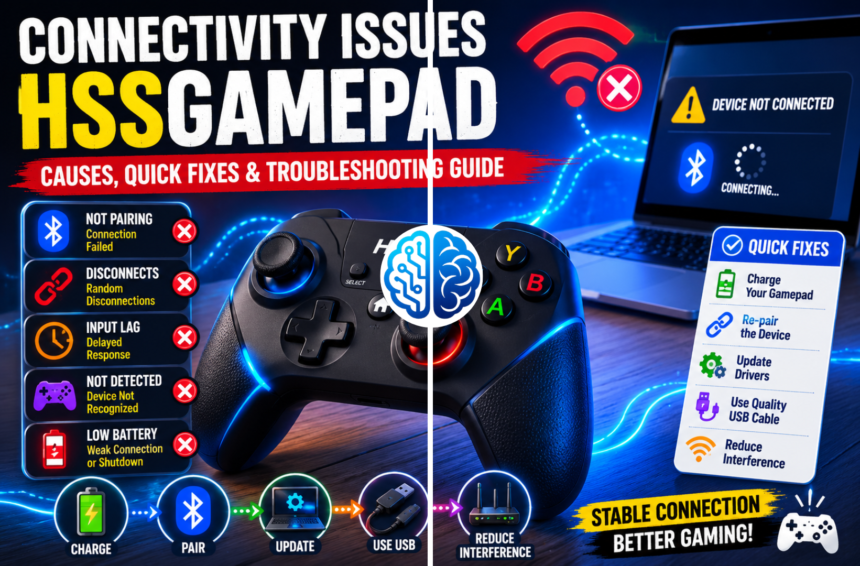
This can include pairing failure, sudden disconnection, input delay, buttons not responding, or the controller showing as connected but not working inside games. In some cases, the gamepad connects to the device, but the game itself does not detect it.
These problems are common with many wireless controllers, not only HSSGamepad. Bluetooth devices depend on signal strength, battery power, software support, and correct pairing. If one part of that chain fails, the controller may behave poorly.
Common Signs
One common sign is that the HSSGamepad does not appear in the Bluetooth list. You turn on pairing mode, search from your phone or PC, but nothing shows up.
Another sign is random disconnection. The controller connects for a few minutes, then suddenly turns off or disconnects during gameplay. This usually happens when the battery is weak, the signal is unstable, or another device is interfering.
Input lag is also a major symptom. You press a button, but the action happens late on screen. In fast games, even a small delay can feel very noticeable.
Sometimes the controller connects successfully, but the game does not respond. This may happen because the game does not support that controller mode, or Windows is treating the controller as a generic device instead of a proper game controller.
Low Battery
A weak battery is one of the simplest but most common reasons behind controller connectivity problems. When the battery is low, the controller may still turn on, but it may not have enough stable power to maintain a strong wireless connection.
This can cause random disconnects, delayed response, or failed pairing. Many users try advanced fixes first, but the real problem is simply low power.
Before changing settings, fully charge the HSSGamepad. Use a proper charging cable and leave it connected long enough. If the controller has an indicator light, check whether it shows full charge before testing again.
If the battery drains very quickly even after charging, the internal battery may be aging or damaged. In that case, the controller may need battery replacement or repair.
Bluetooth Problems
Bluetooth is convenient, but it is not perfect. It works over short-range wireless communication, and the connection can be affected by distance, walls, other wireless devices, and interference.
If your HSSGamepad keeps disconnecting on Bluetooth, keep the controller close to the device. Avoid sitting too far away, especially if there are walls, desks, or other objects between the controller and receiver.
Wireless routers, Bluetooth speakers, headphones, keyboards, and even some USB 3.0 devices can create interference. If many wireless devices are active nearby, the controller signal may become unstable.
A simple fix is to turn off unused Bluetooth devices and move closer to the PC or phone. If you are using a desktop PC, using a good-quality Bluetooth adapter can also improve stability.
Pairing Errors
Incorrect pairing is another common reason behind HSSGamepad connectivity issues. Sometimes the controller is already paired with another device, so it does not properly connect to the new one.
For example, if your gamepad was previously connected to your phone, it may keep trying to reconnect there instead of pairing with your PC. This creates confusion and failed connection attempts.
The best fix is to remove the old pairing from your device settings. On Windows, go to Bluetooth settings, find the controller, and select remove device. On mobile, open Bluetooth settings and forget the controller.
After removing it, restart both the controller and the device. Then put the HSSGamepad back into pairing mode and connect again from the beginning.
Wrong Mode
Many gamepads support different modes for different platforms. A controller may have separate modes for Android, Windows, iOS, or direct input and XInput.
If the HSSGamepad is in the wrong mode, it may connect but not work correctly. The device may detect it, but games may ignore the input.
For Windows gaming, XInput mode is often more compatible because many PC games are designed around Xbox-style controller input. For Android, a different mode may be required depending on the game or emulator.
Check the controller manual for the correct button combination to change modes. If you do not have the manual, look for mode lights or try common mode-switching combinations carefully.
USB Cable Issues
If you are using the HSSGamepad through a wired USB connection, the cable matters a lot. Some USB cables are charge-only cables. They can charge the controller but cannot transfer data.
When a charge-only cable is used, the controller may power on but the PC will not recognize it as an input device. This makes users think the controller is broken, even when the cable is the real issue.
Try a different USB cable that supports data transfer. Also test different USB ports on your computer. If possible, connect directly to the PC instead of using a USB hub.
A damaged or loose USB port can also cause disconnects. If the controller disconnects when the cable moves slightly, the cable or port may be faulty.
Driver Issues
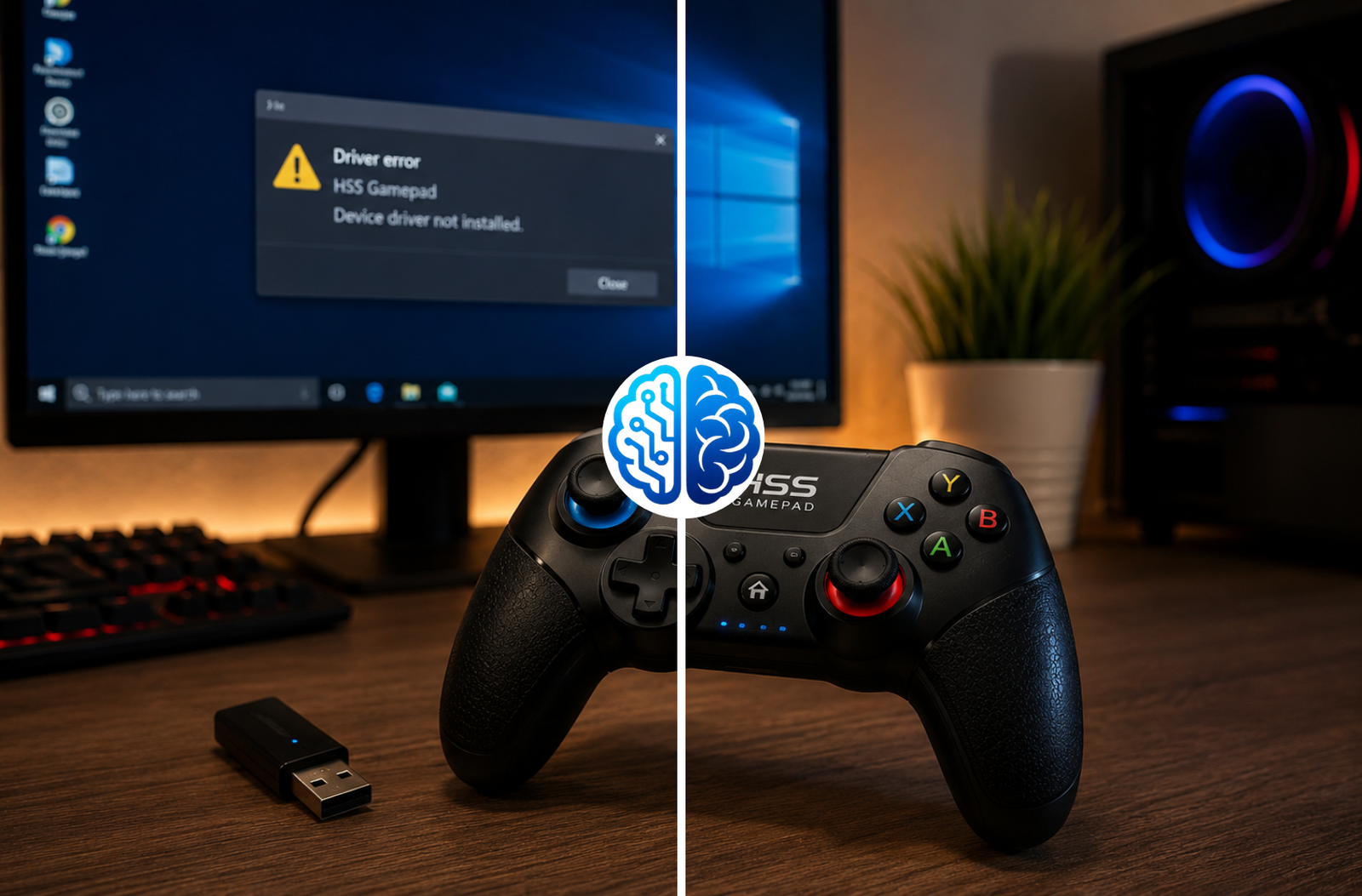
On Windows, drivers help the operating system understand connected hardware. If Bluetooth drivers, USB drivers, or game controller drivers are outdated or corrupted, the HSSGamepad may not work properly.
Open Device Manager and check for warning icons under Bluetooth, Human Interface Devices, and USB controllers. If you see warning signs, update the drivers.
Windows Update can also install important driver updates. Keeping Windows updated helps avoid compatibility problems with Bluetooth and USB devices.
If the controller was working before but suddenly stopped after an update, removing the device and pairing it again may solve the issue.
Game Compatibility
Sometimes the controller is connected perfectly, but the game itself does not support it properly. This is common with older games, mobile games, browser games, and some PC titles outside major platforms.
Some games only support Xbox-style controllers. Others require controller support to be enabled in settings. Some games need Steam Input or another controller mapping tool.
Before blaming the controller, test it in another game. If it works in one game but not another, the issue is likely game compatibility, not hardware failure.
On PC, you can also check the controller through Windows game controller settings. If Windows detects button presses, the controller is working at system level.
Input Lag
Input lag happens when there is a delay between pressing a button and seeing the action on screen. This may happen because of weak Bluetooth signal, low battery, interference, or software processing delay.
For serious gaming, wired connection usually gives more stable response. Bluetooth is fine for casual gaming, but competitive games often feel better with USB.
To reduce lag, keep the controller charged, sit closer to the device, close unnecessary background apps, and reduce nearby wireless interference.
If you are gaming on a TV, also check the TV settings. Many TVs have a “Game Mode” that reduces display delay. Without it, the controller may feel slow even when the controller connection is fine.
Quick Fixes
Start with the basics. Turn off the HSSGamepad and restart your PC, phone, or console. Then try connecting again.
Fully charge the controller before testing. Low battery can cause problems that look like Bluetooth or driver issues.
Remove the controller from Bluetooth settings and pair it again. This clears old connection data and often fixes pairing problems.
Try another USB cable if you are using wired mode. Make sure the cable supports data transfer, not just charging.
Move closer to the connected device. Bluetooth works best at short range with fewer obstacles.
Turn off other Bluetooth devices for a few minutes and test again. This helps you check whether interference is causing the problem.
Update Windows, Bluetooth drivers, and game platform settings. Software updates often fix connection bugs.
Advanced Fixes
If basic fixes do not work, reset the controller if your model supports it. Some controllers have a small reset hole or reset button. Use it carefully according to the device manual.
On Windows, remove the controller from Device Manager and reconnect it. This forces Windows to reinstall the device connection.
If you are using Steam, check controller settings inside Steam. Steam Input can help many controllers work better with PC games, but sometimes it needs to be enabled or configured correctly.
For Android devices, check app permissions and game settings. Some mobile games require controller support to be turned on manually.
If the controller works on one device but not another, the issue is probably with the device settings. If it fails everywhere, the controller itself may have a hardware problem.
Prevention Tips
Keep the HSSGamepad charged before long gaming sessions. Do not wait until the battery is almost empty.
Store the controller safely. Drops, dust, and moisture can damage internal parts and ports.
Use good-quality cables and adapters. Cheap cables often cause unstable wired connections.
Keep your device software updated. Updated drivers and operating systems improve compatibility with accessories.
Avoid connecting the controller to too many devices at once. If you regularly switch between phone, PC, and TV, remove old pairings when needed.
For the most stable experience, use wired mode during competitive gaming and Bluetooth for casual play.
When to Replace It
If your HSSGamepad still disconnects after charging, resetting, changing cables, updating drivers, and testing on multiple devices, the controller may have a hardware fault.
Possible hardware problems include a weak battery, damaged Bluetooth module, broken USB port, or internal circuit issue.
Before replacing it, test the controller on at least two different devices. Also test both wired and wireless modes if available.
If the same issue happens everywhere, repair or replacement may be the best option. If the controller is under warranty, contact the seller or manufacturer.
PEOPLE ALSO READ : Update Dorgenven Version: What Users Should Know Before Upgrading
Final Thoughts
Connectivity issues HSSGamepad users face are usually caused by simple problems such as low battery, pairing errors, Bluetooth interference, wrong controller mode, faulty USB cable, outdated drivers, or game compatibility.
The best approach is to troubleshoot step by step. Start with charging, restarting, re-pairing, and testing another cable. Then move to drivers, controller modes, and game settings.
A stable controller connection makes gaming smoother, faster, and more enjoyable. With the right setup and regular maintenance, most HSSGamepad connection problems can be fixed without replacing the controller.
Frequently Asked Questions
Why does my HSSGamepad keep disconnecting?
The most common reasons are a low battery, Bluetooth interference, outdated drivers, or an unstable wireless connection.
How do I reconnect my HSSGamepad?
Remove the controller from your device’s Bluetooth settings, restart both devices, and pair the controller again.
Can a USB cable cause HSSGamepad connectivity problems?
Yes. A damaged cable or a charge-only USB cable may prevent proper data communication between the controller and device.
Does updating drivers help fix connectivity issues?
Yes. Updated Bluetooth and USB drivers often resolve compatibility and connection problems on Windows devices.
Is a wired connection better than Bluetooth?
For maximum stability and lower input lag, a wired USB connection is generally more reliable than Bluetooth.