
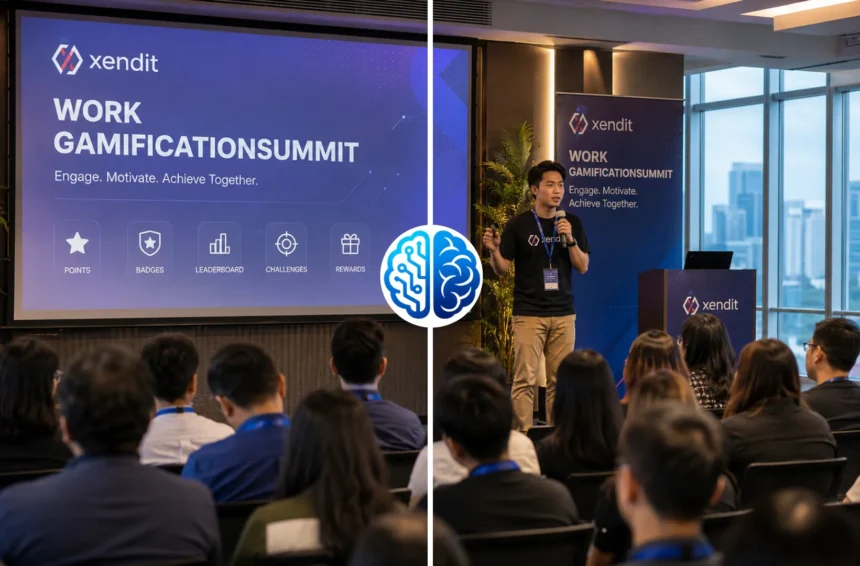
Xendit Work GamificationSummit is a phrase that has started appearing in online searches around workplace gamification, digital business culture, and employee engagement. While it does not appear to be an official standalone Xendit product or event, the term is best understood as a concept that connects Xendit’s fintech work environment with the wider idea of gamification in modern workplaces.
In simple words, it points toward how companies can use game-like systems at work to make tasks more engaging, measurable, and motivating. These systems may include points, badges, progress levels, team challenges, leaderboards, rewards, and learning milestones.
The reason professionals are talking about this idea is simple: modern work is changing. Companies want employees to stay productive, but employees also want meaningful work, recognition, flexibility, and growth. Gamification sits between these two needs.
Quick Bio Table
| Information | Details |
|---|---|
| Category | Workplace Gamification |
| Related Industry | Fintech & Business Innovation |
| Main Focus | Employee Engagement and Productivity |
| Concept Type | Workplace Strategy |
| Official Xendit Product | Not Publicly Confirmed |
| Key Features | Points, Badges, Rewards, Leaderboards |
| Primary Goal | Improve Motivation and Performance |
| Target Audience | Businesses, Managers, HR Professionals |
| Benefits | Engagement, Learning, Collaboration |
| Challenges | Over-Competition and Poor System Design |
| Future Potential | AI-Powered Workplace Gamification |
What Is Xendit?
Xendit is a financial technology company that provides payment infrastructure for businesses, especially across Southeast Asia. It helps companies accept payments, send money, manage transactions, and build digital payment systems more easily.
Businesses use Xendit for online payment methods, payment links, virtual accounts, cards, e-wallets, disbursements, and other financial tools. Its main value is making payment operations simpler for startups, online sellers, platforms, marketplaces, and larger businesses.
Because Xendit works in a fast-moving fintech space, people often connect it with innovation, digital systems, automation, and modern workplace practices. That is why the phrase “Xendit Work GamificationSummit” is usually discussed as a workplace innovation topic rather than a normal payment feature.
What Is Gamification?
Gamification means using game-style elements in non-game situations. In the workplace, this means turning normal tasks, training, learning, or performance goals into structured activities that feel more interactive.
For example, an employee may complete training modules and earn badges. A support team may receive points for solving customer issues quickly. A sales team may track monthly goals through levels or progress bars.
The purpose is not to turn work into a game completely. The real purpose is to make progress visible, encourage participation, and give people a sense of achievement.
What Is Xendit Work GamificationSummit?
Xendit Work GamificationSummit can be understood as a topic around workplace gamification inspired by modern fintech companies like Xendit. It focuses on how digital-first companies can use gamified systems to improve employee engagement, training, collaboration, and performance.
The “summit” part suggests a discussion, event, or thought-leadership style concept where professionals explore how gamification can be used at work. It may include ideas such as employee rewards, digital dashboards, learning challenges, productivity tracking, and performance recognition.
However, it is important to be clear: there is no strong public evidence that “Xendit Work GamificationSummit” is an official Xendit product. A responsible way to write about it is to present it as a concept linked to workplace gamification and fintech culture.
Why Professionals Are Talking About It
Professionals are interested in workplace gamification because employee motivation is one of the biggest challenges in modern companies. Remote work, hybrid teams, digital tools, and fast deadlines have changed how people experience work.
In many offices, employees do not only want salary and job security. They also want recognition, learning opportunities, personal growth, and a clear view of their progress. Gamification can support these needs when designed carefully.
For managers, gamification can make performance easier to track. For employees, it can make daily tasks feel less invisible. That combination is why HR leaders, startup founders, trainers, and team managers are paying attention.
How It Works
A gamified workplace system usually starts with a clear goal. The company first decides what it wants to improve. This could be training completion, sales performance, customer support quality, onboarding speed, or team collaboration.
After that, the company adds game-like mechanics. These may include points for completed tasks, badges for achievements, levels for skill growth, and leaderboards for friendly competition.
The system then gives regular feedback. Employees can see where they stand, what they have completed, and what they need to do next. This visible progress is one of the strongest parts of gamification.
Points and Rewards
Points are one of the most common gamification tools. Employees may earn points for completing tasks, reaching targets, finishing training, helping teammates, or solving customer problems.
The points should connect to meaningful actions. If the system rewards the wrong behavior, employees may focus on numbers instead of quality. For example, rewarding only speed in customer support may reduce service quality.
Rewards can be digital or physical. They may include badges, certificates, public recognition, bonuses, career opportunities, or small incentives. The best rewards feel fair and connected to real contribution.
Badges and Achievement
Badges give employees a visible symbol of progress. They can show that someone has completed a course, mastered a tool, helped a team, or reached a milestone.
This may sound simple, but recognition matters. Many employees lose motivation when their effort is not noticed. A badge system can help highlight progress that might otherwise stay hidden.
Badges work best when they represent real skill or effort. If every small task gets a badge, the system loses meaning. Good gamification keeps achievements valuable.
Leaderboards
Leaderboards show rankings based on points, performance, or progress. They can create excitement and friendly competition, especially in sales, support, training, or challenge-based work.
But leaderboards must be used carefully. Not every team enjoys public ranking. Some employees may feel pressure or embarrassment if they are always at the bottom.
A better approach is to use team-based leaderboards, personal progress tracking, or category-based recognition. This keeps competition healthy and reduces unnecessary stress.
Learning and Training
One of the best uses of workplace gamification is employee learning. Instead of giving workers long training documents, companies can create short modules, quizzes, levels, and progress paths.
This makes learning easier to follow. Employees know what they have completed and what comes next. Managers can also see who needs support.
For fintech companies, training is especially important because teams often deal with compliance, security, customer trust, and technical systems. Gamified learning can make serious topics easier to understand without making them careless.
Employee Engagement
Engagement is more than being busy. An engaged employee feels connected to the work, understands the goal, and believes their contribution matters.
Gamification can support engagement by giving employees regular feedback and recognition. Instead of waiting months for a performance review, workers can see progress in real time.
However, gamification cannot fix a weak workplace culture by itself. If employees feel underpaid, ignored, or unfairly treated, badges and points will not solve the deeper problem. Gamification works best when it supports a healthy culture.
Team Collaboration
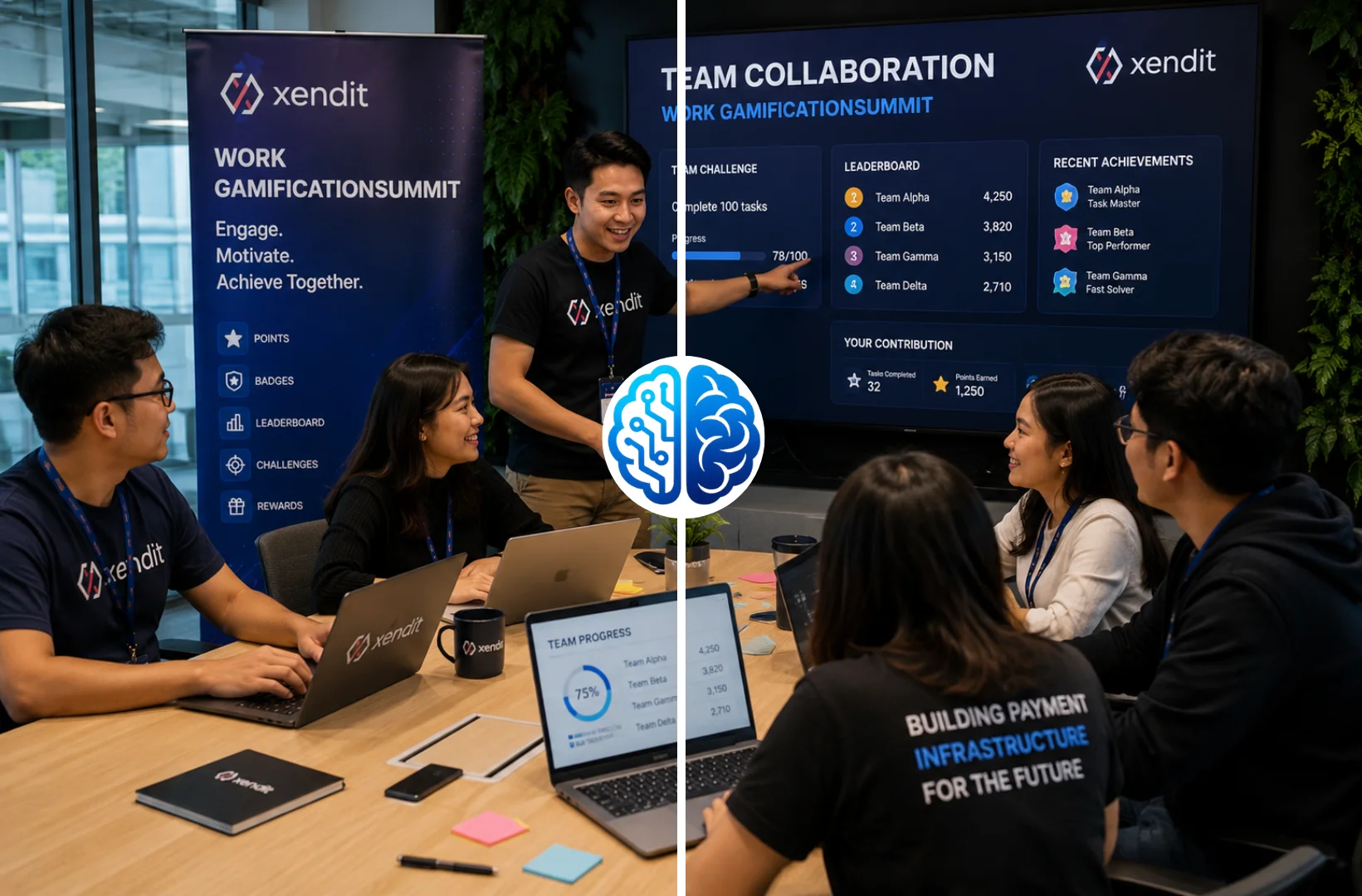
Gamification is not only about individual performance. It can also improve teamwork. Companies can create group missions, department challenges, shared goals, and collaboration rewards.
For example, a customer support team may work together to improve response quality. A product team may complete a sprint challenge. A training group may unlock a reward only when everyone finishes a module.
This approach helps prevent unhealthy competition. Instead of employees fighting for the top position, they work together toward a shared achievement.
Benefits for Businesses
The biggest benefit for businesses is better visibility. Managers can see progress, training completion, task performance, and participation more clearly.
Gamification can also improve productivity when goals are well-designed. Employees often respond better when they understand what is expected and receive quick feedback.
Another benefit is stronger learning. When training feels interactive, employees are more likely to complete it and remember the material. This is useful for fast-growing companies that need consistent onboarding.
Benefits for Employees
For employees, gamification can make work feel more rewarding. It gives them a clearer sense of progress and achievement.
It can also help people build skills. When learning is broken into levels, employees may feel less overwhelmed. They can move step by step instead of facing one large training process.
Recognition is another major benefit. A good gamification system highlights effort, not just final results. This helps employees feel seen for their contribution.
Possible Challenges
Gamification has risks if it is poorly designed. One common problem is focusing too much on points. When people care only about scores, they may ignore quality, ethics, or teamwork.
Another issue is unfair competition. If employees have different roles, workloads, or resources, ranking them on the same leaderboard may feel unfair.
There is also the risk of “game fatigue.” At first, employees may enjoy a new system, but if it never changes, they may lose interest. A gamified system needs updates, fresh challenges, and meaningful rewards.
Ethical Concerns
Companies must be careful not to use gamification as a pressure tool. If every action is tracked and scored, employees may feel watched instead of motivated.
A healthy system should respect people. It should support growth, learning, and recognition. It should not create anxiety, manipulation, or constant competition.
Transparency is important. Employees should know what is being measured, why it matters, and how the data will be used.
Best Practices
A good workplace gamification system starts with clear goals. The company should know exactly what behavior it wants to encourage.
The second step is fairness. Rules should be simple, transparent, and suitable for different roles. Employees should not feel that the system favors only one type of worker.
The third step is balance. Gamification should include both individual achievement and team collaboration. This keeps the culture healthier.
Finally, feedback matters. Companies should ask employees what works and what feels unnecessary. The best systems improve over time.
Why It Fits Modern Fintech Culture
Fintech companies work in a world of speed, data, automation, and digital experience. Gamification fits naturally into that environment because it uses dashboards, progress tracking, and behavioral design.
In a fintech workplace, teams often deal with complex products, compliance, customer support, and technical integrations. Gamified systems can make these areas easier to learn and manage.
This is why a phrase like Xendit Work GamificationSummit attracts attention. It combines two things professionals care about: digital finance innovation and better workplace engagement.
Future of Workplace Gamification
The future of workplace gamification will likely include more personalization. Instead of giving every employee the same challenges, systems may adapt to each person’s role, skill level, and learning needs.
Artificial intelligence may also play a role. AI could help recommend training, detect performance gaps, and suggest fairer reward systems.
At the same time, companies will need to protect employee trust. The future of gamification should not be about controlling workers. It should be about helping people grow, contribute, and feel recognized.
PEOPLE ALSO READ : DigitalRGS Everything Apple: A Complete Guide to Apple Devices, Features, and Benefits
Conclusion
Xendit Work GamificationSummit is best understood as a workplace gamification concept connected to modern fintech culture, employee engagement, and digital business systems. It is not clearly proven to be an official Xendit product, so it should be discussed carefully and honestly.
The idea is still valuable because it highlights an important trend: companies are looking for better ways to motivate teams, improve learning, and make work more engaging.
When designed well, gamification can help businesses improve productivity, training, collaboration, and employee recognition. But when designed poorly, it can create pressure, unfair competition, or meaningless rewards.
The best approach is human-centered. Points, badges, and leaderboards should support people, not replace real leadership. That is why professionals are talking about workplace gamification — not because work needs to become a game, but because work needs to feel more visible, fair, and meaningful.
Frequently Asked Questions
What is Xendit Work GamificationSummit?
Xendit Work GamificationSummit is a concept that combines workplace gamification strategies with modern fintech-inspired work environments.
Is Xendit Work GamificationSummit an official Xendit product?
There is no public evidence that it is an official standalone Xendit product; it is generally discussed as a workplace gamification concept.
How does workplace gamification improve employee engagement?
It uses rewards, badges, points, and progress tracking to make work more interactive and motivating.
Who can benefit from workplace gamification?
Businesses, startups, HR teams, managers, trainers, and employees can all benefit from well-designed gamification systems.
What are the main benefits of Xendit Work GamificationSummit?
The key benefits include improved productivity, stronger employee engagement, better learning outcomes, and enhanced team collaboration.