

People searching for MotoAssure Admin BBB are usually trying to find out whether MotoAssure Administration is a trustworthy company. They may be considering a vehicle protection plan, dealing with a repair claim, or checking the company’s reputation before making a payment.
That research is important because vehicle service contracts can be complicated. The company selling the plan may not be the same company handling claims. A separate finance company may also collect monthly payments. Understanding MotoAssure’s role, BBB rating, customer reviews, complaints, coverage options, and claim process can help consumers make a more informed decision.
Quick Bio Table
| Detail | Information |
|---|---|
| Company name | MotoAssure Administration |
| Common search term | MotoAssure Admin BBB |
| Business type | Vehicle service contract administrator |
| Main service | Administration of vehicle protection plans |
| BBB accreditation | Yes |
| BBB rating | A− at the time of research |
| Accreditation date | January 24, 2024 |
| Available plans | Platinum, Gold, Powertrain, and Prepaid Maintenance |
| Claims responsibility | Reviews and authorizes eligible vehicle repair claims |
| Coverage type | Depends on the customer’s individual contract |
| Common complaints | Claim denials, delays, cancellations, and coverage disputes |
| Important consideration | The contract seller may differ from the plan administrator |
What Is MotoAssure Administration?
MotoAssure Administration is a company involved in managing vehicle service contracts. These contracts are often called extended auto protection plans or extended warranties, although they are not usually the same as a manufacturer’s original warranty.
A vehicle service contract may help pay for certain repairs after a covered mechanical component fails. Depending on the plan, coverage may include parts of the engine, transmission, drivetrain, electrical system, air conditioning, suspension, steering, and other vehicle systems.
MotoAssure’s role may include reviewing repair estimates, communicating with repair facilities, checking maintenance records, requesting inspections, and deciding whether a repair qualifies under the contract.
The company promotes several coverage levels, including Platinum, Gold, Powertrain, and Prepaid Maintenance plans. Each plan provides a different level of protection.
The plan name alone does not explain everything. Customers should always read the actual contract because deductibles, exclusions, limits, waiting periods, and repair requirements may vary.
What Does MotoAssure Admin BBB Mean?
The phrase MotoAssure Admin BBB does not describe a separate service or plan. It refers to MotoAssure Administration’s profile on the Better Business Bureau website.
A BBB profile may show the company’s current letter rating, accreditation status, customer reviews, complaint history, contact information, and business responses.
Consumers often use BBB information to check how a business handles customer concerns. However, a BBB rating does not guarantee that every repair claim will be approved or that every customer will have a positive experience.
Claim decisions are normally based on the written contract, the cause of the breakdown, the vehicle’s condition, and whether the customer followed the required claim process.
MotoAssure Admin BBB Rating
At the time of research, MotoAssure Administration was listed as a BBB-accredited company with an A− rating.
An A− rating is generally a positive sign. It suggests that the business has maintained a relatively strong standing under the BBB’s rating system.
The BBB may consider factors such as complaint volume, responses to complaints, transparency, business practices, and the length of time a company has operated.
Still, the rating should be understood correctly. It does not mean the BBB has reviewed every MotoAssure contract or approved every decision made by the company.
A customer can still receive a denied claim when the failed component is excluded, the damage is considered pre-existing, required maintenance was not completed, or repairs began before authorization.
The BBB grade reflects the company’s overall relationship with the organization. The customer’s contract remains the final authority on coverage.
Is MotoAssure BBB Accredited?
MotoAssure Administration is listed as a BBB-accredited business. Its profile states that accreditation began in January 2024.
BBB accreditation is voluntary. A company generally applies for it, agrees to follow BBB standards, and pays the required fee.
Accreditation may show that the company is willing to maintain public business information and participate in the BBB complaint process. However, it is not the same as government approval, insurance protection, or a guarantee of customer satisfaction.
It should be viewed as one positive trust signal rather than complete proof that every plan offers good value.
MotoAssure BBB Reviews
MotoAssure’s BBB review page contains both positive and negative customer experiences.
Positive reviews often describe successful repair claims. Some customers say MotoAssure worked with their repair shop, approved eligible repairs, and helped reduce a large mechanical bill. In these cases, the customer may have paid only a deductible and any non-covered costs.
Other positive comments mention professional representatives, clear explanations, or financial relief during an unexpected breakdown.
These experiences suggest that MotoAssure-administered coverage can be useful when the failed component is covered and the claim process is followed properly.
Negative reviews often focus on claim delays, denied repairs, communication problems, maintenance-document requests, or confusion over cancellations and billing.
Some customers may believe that a plan covers nearly every repair, while the contract contains exclusions that limit coverage. Others may become frustrated when an inspection or additional diagnosis is required before authorization.
Customer experiences can vary because every mechanical failure is different. One driver may have a clearly covered repair, while another may have damage caused by overheating, poor maintenance, an excluded component, or a condition that existed before coverage began.
BBB reviews can reveal patterns, but they should be read carefully. The BBB does not independently verify every statement submitted by reviewers.
The most useful reviews are usually those that explain what happened, what repair was needed, why the claim was approved or denied, and how the company responded.
MotoAssure BBB Complaints
MotoAssure’s BBB profile also includes publicly reported complaints. Complaint totals can change as new cases are filed and older cases move outside the reporting period.
The total number of complaints does not tell the full story. A company handling many contracts may receive more complaints than a smaller administrator simply because it serves more customers.
The type of complaint and the company’s response are often more important.
Claim denials are a common concern in the vehicle protection industry. A customer may believe a major repair should be covered, while the administrator determines that the failed part or cause of damage is excluded.
Pre-existing conditions are another frequent source of disagreement. Vehicle service contracts generally do not cover problems that began before the plan became active.
Maintenance records may also affect claim decisions. Some contracts require customers to follow the manufacturer’s service schedule. If oil-change receipts or other records cannot be provided, the administrator may question whether neglect contributed to the failure.
Diagnostic and teardown charges may also create complaints. A repair facility may need to disassemble part of the vehicle to determine the exact cause of damage. If the final diagnosis is excluded, the customer may be responsible for those costs.
Cancellation disputes can happen when customers do not realize that MotoAssure may only administer claims. The original seller or finance company may control payments, refunds, or cancellation processing.
This is why customers should identify every company involved before signing a contract.
What MotoAssure Plans May Cover
MotoAssure advertises several types of vehicle protection plans.
The Platinum plan is presented as the broadest coverage option. It may include protection for major systems such as the engine, transmission, steering, suspension, electrical components, air conditioning, seals, gaskets, and selected convenience features.
The Gold plan generally follows a named-component structure. This means only the components specifically listed in the agreement are covered.
The Powertrain plan focuses on major mechanical systems, such as the engine, transmission, drive axle, and related components. It may cost less than broader coverage, but it usually does not include as many electrical, comfort, or technology features.
MotoAssure also promotes prepaid maintenance coverage. This type of plan may help with selected routine services rather than unexpected mechanical breakdowns.
Customers should never assume that a maintenance plan will cover a major repair. The signed contract explains the actual benefits.
Potential Benefits
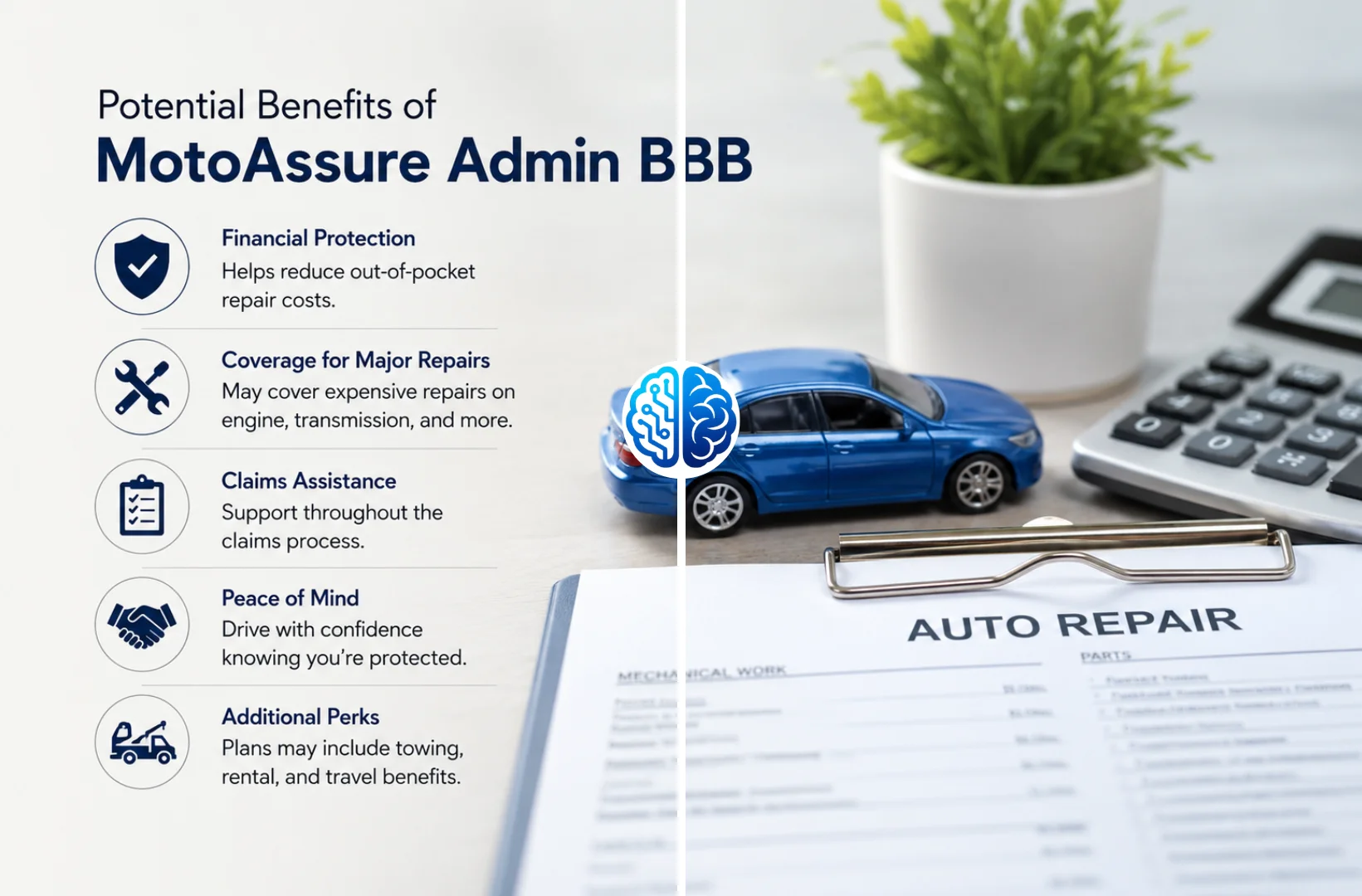
The main benefit of a vehicle service contract is help with certain unexpected repair costs.
Modern vehicles can be expensive to repair. Engine, transmission, electrical, air-conditioning, and technology-related problems may cost thousands of dollars.
When a repair is covered, the customer may only need to pay the deductible and any charges outside the contract. This can make a sudden repair bill easier to manage.
Another possible benefit is having the administrator communicate directly with the repair shop. The mechanic may submit the diagnosis, estimate, photographs, maintenance records, and other information needed for review.
Some contracts may also include towing, roadside assistance, rental-car reimbursement, or trip-interruption benefits. These services can be helpful, but they usually have limits.
A protection plan may also make repair expenses more predictable. Some drivers prefer paying a monthly amount instead of risking a large repair bill later.
Whether the plan is worthwhile depends on the total cost, vehicle age, mileage, reliability, deductible, exclusions, and expected repair needs.
Important Limitations
A vehicle service contract does not cover every repair.
Normal maintenance is usually excluded unless the customer purchased a separate maintenance plan. Oil changes, filters, tires, brake pads, and other routine services may remain the owner’s responsibility.
Wear items may also be excluded, especially parts expected to deteriorate through ordinary use.
Pre-existing problems are generally not covered. If a vehicle was already leaking fluid, showing warning lights, making unusual noises, or showing signs of failure before coverage began, the claim may be denied.
Damage related to overheating, poor lubrication, lack of maintenance, collision damage, modifications, racing, commercial use, or environmental conditions may also be excluded.
The cause of damage can be just as important as the failed component. A covered engine part may not qualify if it was damaged because the vehicle continued operating while overheated.
Customers should read both the coverage section and the exclusions section of the contract. Reading only the covered-component list can create unrealistic expectations.
How the Claims Process Works
The claim process usually begins when the customer takes the vehicle to a licensed repair facility.
The mechanic diagnoses the problem and contacts the administrator before beginning major repairs.
MotoAssure may request a written estimate, diagnostic results, photographs, maintenance records, fault codes, or inspection information.
An independent inspector may be sent to examine the vehicle. In some cases, the repair shop may need to perform a teardown so the exact cause of failure can be identified.
Before approving a teardown, customers should ask who will pay for it if the claim is denied.
Once the information is reviewed, MotoAssure decides whether the repair qualifies under the contract.
When a claim is approved, the administrator may authorize payment directly to the repair facility. The customer usually pays the deductible and any non-covered amount.
Major repairs should not begin before authorization. Unauthorized work may not be reimbursed.
Why Claims May Be Denied
A claim may be denied when the failed part is not covered by the agreement.
The cause of the failure may also be excluded. Damage caused by overheating, neglect, lack of oil, collision damage, or an uncovered component may not qualify.
A claim may be rejected when the administrator believes the problem existed before coverage began or appeared during the waiting period.
Missing maintenance records can also cause difficulty, especially when the failure may be connected to poor servicing.
Repairs completed without authorization may not be covered. Contract limits may also reduce the amount the administrator is willing to pay.
When a claim is denied, the customer should request a written explanation and ask which contract section supports the decision.
This makes it easier to understand the denial and decide whether an appeal is appropriate.
Is MotoAssure Administration Legitimate?
MotoAssure Administration appears to be a real operating business.
The company has an official website, published contact information, plan descriptions, a BBB profile, accreditation, customer reviews, and public complaint responses.
These details support the conclusion that MotoAssure is an identifiable vehicle service contract administrator.
However, a legitimate company does not automatically offer the right plan for every customer.
A contract may be too expensive, contain significant exclusions, duplicate existing coverage, or provide limited value for a particular vehicle.
The better question is whether the specific contract fits the customer’s vehicle, budget, driving habits, and repair risks.
Seller and Administrator Difference
MotoAssure may not be the company that originally sold the plan.
A separate seller may advertise the coverage, contact the customer, arrange monthly payments, or provide financing. MotoAssure may only become involved when a repair claim is submitted.
This difference can cause confusion.
A customer may contact MotoAssure about a payment problem and learn that the issue must be handled by the finance provider. Someone requesting cancellation may be directed to the original seller.
Before buying, customers should identify the seller, administrator, finance company, contract provider, and cancellation department.
These names should be included in the agreement.
What to Check Before Buying
Customers should request the complete contract before making a payment.
They should review whether the plan offers broad exclusionary coverage or only covers listed components. The waiting period, deductible, labor-rate limits, parts policy, maximum payout, maintenance rules, and cancellation terms should also be examined.
Customers should confirm whether the deductible applies per repair visit or per component. They should also find out whether the contract pays the full labor rate charged by their preferred repair shop.
The agreement should explain whether new, remanufactured, aftermarket, or used parts may be installed.
Maximum benefit limits are also important. Some contracts limit payment for one repair, one component, the full contract term, or the vehicle’s current value.
Cancellation rules should explain the free-look period, refund calculation, cancellation fees, mileage deductions, and the effect of previously paid claims.
Any important sales promise should appear in writing. Verbal statements can be difficult to prove later.
PEOPLE ALSO READ : BeaconSoft Latest Tech Info: What It Is, Key Features, Benefits, and Latest Updates
Final Thoughts
The MotoAssure Admin BBB profile presents a generally positive picture of the company. MotoAssure is BBB accredited and holds a strong rating. Its customer reviews include many reports of successful covered repairs.
At the same time, BBB complaints show that disputes can happen. The most common concerns involve denied claims, coverage limitations, communication delays, maintenance requirements, cancellations, and confusion between the seller and administrator.
MotoAssure coverage may be useful when the customer understands the contract, maintains the vehicle properly, keeps service records, and follows the claim procedure.
The BBB profile is a helpful research tool, but it should not be the only factor considered.
Before purchasing a MotoAssure-administered plan, consumers should read the complete agreement, identify every company involved, understand the exclusions, confirm the deductible, review the repair process, and examine the cancellation policy.
The real value of the plan depends on what the written contract covers, not simply on the company’s rating or advertising.
Frequently Asked Questions
What is MotoAssure Admin BBB?
MotoAssure Admin BBB refers to the company’s Better Business Bureau profile, including its rating, accreditation, reviews, and complaints.
Is MotoAssure Administration BBB accredited?
Yes. MotoAssure Administration is listed as a BBB-accredited business and held an A− rating when this article was researched.
Is MotoAssure Admin a legitimate company?
MotoAssure appears to be an operating vehicle service contract administrator with an official website, BBB profile, customer reviews, and published contact information.
What does MotoAssure cover?
Coverage depends on the selected plan and contract. Plans may cover the engine, transmission, drivetrain, electrical system, steering, and other listed components.
Why might MotoAssure deny a claim?
A claim may be denied because of exclusions, pre-existing damage, missing maintenance records, unauthorized repairs, or a component not covered by the contract.